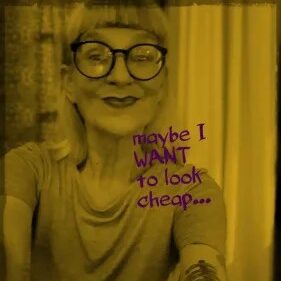

Character assassination is at once easier and surer than physical assault; and it involves far less risk for the assassin. It leaves him free to commit the same deed over and over again, and may, indeed, win him the honors of a hero in the country of his victims.
Alan Barth[1]

A beloved and wise friend told me many years ago that, if you shine your light moths will come. He meant that my blog – and subsequent Facebook – popularity had provoked a spiteful rumour campaign from a jealous old circuit queen, and this had unexpected implications on both my business and personal life at the time. My friend had picked me up from my self-pitying snivelling funk, and was fiercely scolding me back together after I had been shattered by my experience. It was the first hard knock that toppled me from my seat in the choir of disciples who had sung the praises of cyberspace and the birth of social media some 20 years ago. I had experienced a first taste of what today is commonly referred to as Cancel Culture. It has been known by many names in the history of mankind’s social history, but it is character assassination at the hands of a frenzied, rabid mob. Defamation of character, uttering, libel, slander, it goes by many names; amongst literary academics, for example, it is a Trope, whereas in law-speak it is a Tort .
According to Wikipedia: A literary trope is the use of figurative language, via word, phrase, or an image, for artistic effect such as using a figure of speech. The word trope has also come to be used for describing commonly recurring literary and rhetorical devices, motifs, or clichés in creative works.
The Cornell University definition is nice and simple for a legal tort: it is an act or omission that gives rise to injury or harm to another and amounts to a civil wrong for which courts impose liability. In the context of torts, “injury” describes the invasion of any legal right, whereas “harm” describes a loss or detriment in fact that an individual suffers.
In a cyber tort, when seeking to stop defamation legally, the defender of a reputation never actually wins the case and must scrabble to pick up a life from the wreckage: the whiff of scandal never dies amongst those for whom it was a memorable and salacious moment of unfamiliar power. In the business world, of course, any hint of scandal is the death knell for a career. The repercussions are dire when it comes to the impact of a blunt weapon in the ignorant hands of a psychopathic manipulator, and the practice of cancel culture has become so rampant that it has become a field of study in its own right.
Will Britney Spears ever resurrect herself, even with Queen Elton’s helping hand? Despite my optimism a while back, I somehow doubt it. Read my post about it here and let me know what you think. The internet is trailer trash behaving badly, Jerry Springer on speed. Moths bashing at a lit screen. The world is but a hut, and everyone is connected to watch the gladiators performing in the Colosseum. Baying for blood.
According to Nicole Dudenhoefer writing in Pegasus, the magazine of the University of Central Florida, “centuries ago, it was tarring and feathering. Today, it’s a hashtag. It’s evolving, but cancel culture is effective. It’s mob mentality. (It’s) a modern social justice practice. An impediment to free speech. A platform for marginalized voices. Call it what you will. Cancel culture is a concept so hotly debated that it remains in limbo, much like many individuals’ attitudes toward it.” [2]
In those heady early days of my love affair with Facebook and blogging, when my milkshake brought all the moths, moffies, and some venomous lavatory lizards to my yard, that mob was not yet hostile; the rampant virus was still benign.
As a socially-inept hermit who doesn’t want to miss a thing or ever stop learning, I’m the original FOMO meme poster girl. I want to be at the party, but I’m always thinking about being home while I’m there. I took to social media like a fish to water. It was being at home while experiencing the party ambience, it was an unexpected infatuation. I gushed about Facebook to my cautionary friends: it is a place where you can play, give free reign to creativity, it can educate the world! I chorused. For me the allure was unlimited access to the thing that is my eternal saviour, my life long refuge: literature. Join Facebook, I preached to all and sundry; it is a place where size doesn’t matter and where Funny Peculiar is so thick in the water you can hardly find a place for your lilo. The swimming pool is the whole ocean of oddballs surfing in your own yard and everyone is laughing, but they’re not laughing at you, they’re laughing with you. Start blogging, I implored my friends. They, most of them, still had Nokia 2110s and were even cautious about sharing their phone numbers to just anyone.
How can you put yourself so much out there? My technophobic pals asked, aghast, as I shared my everyday life with the world at large alongside my daily recipes and coffee shop photos.
Back in 2007, having moved back to Johannesburg, I found myself at a loss as to how to occupy my mornings. I fell into the habit of reading the newspapers and want ads on my laptop and to mounting a fervid email campaign to reacquaint myself with people I’d worked with before my departure from Johannesburg almost seven years before, in the hope of picking up some freelance work. Facebook had just launched in South Africa and was popping up in the news all over. One day in April, on the spur of the moment, I signed up.
At the time, I’d been reading a lot of Evelyn Waugh, Anthony Trollope, the Bloomsbury and Algonquin crowds, and re-reading all the Quentin Crisp diaries, so those were the sorts of things I typed in as my interests as I completed my profile. I typed in Led Zeppelin, fashion, shoes, food, and wine as interests too. Up popped a list of pages that might match the interests I’d indicated and, pretty soon, suggestions started appearing for people with whom I shared these interests and with whom I could choose to be friends. It didn’t take me long to comprehend the functionality and before long I was searching for long-lost school friends and current work associates who may have discovered this exciting new platform for communication. I began to decorate and populate my personal page with posts. I was thoroughly enjoying myself and, when I got to the ‘about me’ page, I quickly typed up a page of a mish-mash of memories into a story that brought a composite of various older male figures of my childhood into the fictional piece. I pressed ‘post’ and voila! Within days a steady stream of gay South African men sent me friend requests and shared my frivolous post, titled I’M A FAG HAG AND PROUD OF IT. (I have reposted it in the footnotes to this post.)
My first post took off like a rocket – nowadays I would say it went viral, but I didn’t know that language yet, although I had caught the virus and it would take almost twenty years of similar attacks and a lot of research for me to decide that the internet is the low point of civilisation, and to make the decision to leave social media entirely.
After all, I reasoned, Stephen King doesn’t even own a cellphone, and just look at him go.
I soon found that it’s not as easy as simply vacating the scene of the assassination by leaving social media. To begin with, we don’t have a postal system in South Africa; you literally can’t work, you can’t survive. The obstacles to a life offline are insurmountable. My research proved that many had t without the internet. I tried it and failed. But how to keep those toxic moths at bay when I switched on my screen to engage in bright lights of cyberspace? All my research pointed to exercising caution about sharing anything I was not prepared to share publicly. In other words: be wary of those who screenshot. Read more here.
Thank you for reading. You may also want to read my posts about:
The pitfalls of sharing: screenshot perfidy.
The fall and fall of Britney Spears, despite Elton John’s helping hand.
I’M A FAG HAG AND PROUD OF IT
When Quentin Crisp was asked by an audience member: “ Should I tell my mother that I am Gay”?. Mr Crisp replied: “ Never tell your mother anything!”: I was genetically predisposed to being the Fag Hag I am. My mother, an incredibly glamorous hairdresser in the 1960s Bloemfontein, was a Fag Magnet of note. In an era when homosexuality was a criminal offence, our home was a safe haven for parties few people ever forgot. I grew up with many, many uncles. There were my mom’s fellow hairdressers, fondly known as Bennie en Hennie because of the perpetual cloud of Benson & Hedges cigarette smoke surrounding them (smoking was de rigueur back then). Bennie could always be relied on to dance with a lampshade on his head, or wear the flokati rug as a shawl while he sang Cole Porter classics. Then there was Uncle Arch. Uncle Arch stayed at the same seaside hotel as us every December in Margate. Uncle Arch was a ‘bachelor’ and never wore shorts to the dining room, even if it was only going to be a buffet. Uncle Arch taught my sister and I that it’s not worth having a martini if there weren’t any olives, and that we shouldn’t ever bother with chaps who wore socks a shade lighter than their trousers. Uncle Arch could take a 5 cent piece from behind my ear and let me keep it to buy a bead necklace at the beach. People marvelled that such a handsome and erudite man had never married. Gossip had it that there had been a romantic disappointment. My mom and Uncle Arch sipped Gin Slings by the poolside and wondered what possessed that woman to think she should show the world the back of her legs, or why that pathetic man woke up this morning and thought it a quite good idea to wear satin jogging shorts in public. My grandparents had the ultimate marriage-of-convenience. They had separate bedrooms from day one; they took sea cruises as often as they could. They adored one another in a sedate and very civilized manner. He was in charge of the drapery department at John Orrs and their home had baroque pieces of fabric hanging all over the place, even where there were no windows. He knew Evelyn Waugh in his youth. By some unspoken, impeccable code of conduct, he was probably what I think of as a ‘navy moffie’:” only when on board, if it’s good for morale”! Growing up, I somehow always ended up partnering the ‘artistic guy’ to the school dances. It was just more fun to plan my outfit with someone who appreciated that my long gloves were vintage, who’d suggest we do the whole retro-Charleston thing properly or not at all, including tortoiseshell cigarette-holders. My most enduring relationships have been Pink. I value the uncomplicated acceptance and support, I love the exuberant shopping and travel experiences, and I adore the drama and excitement of the build up to Pride every year. I’ve shared the shockingly cruel pandemic that is AIDS, I’ve mopped brows and carried chicken soup during the dreadful fight and lost too many times. I’ve done the flowers at too many funerals, but I’ve always come away enriched by the strong sense of community and support. And I always come away, somehow, with one more Gay Best Friend. Not even my husband is brave enough to say, as my camp-as-a-row-of-tents hairdresser did: “sny jou bolla, Dolla, you look a hundred in the shade”. Gotta love him. [Posted as Original Cin on now-defunct platform Media24 Blogs, 2007.)
Tags: Things my friends say, pop psychology, cyber tort, cancel culture, social media evils
[1] Alan Barth (1906-1979) served on the editorial board of The Washington Post for thirty years. This is an excerpt from his essay, “The Heritage of Civil Liberties,” which appeared in Barth, The Rights of Free Men (New York: Alfred A. Knopf, Inc., 1984). Copyright by The Washington Post Company.
[2] https://www.ucf.edu/pegasus/is-cancel-culture-effective/Retrieved 14 June 2023.
\ Get the latest news /
