

An Introduction to What Forensic IT Can Establish About Social Media Stalkers
It’s wonderful to be on the blogs again. Those friends who have blogged with me since the birth of the blogs (back in the Nineteen Hundreds and early 21st Century) will notice my disjointed and meandering style is unchanged, and I can reassure you that I am still making profuse and wild use of em dashes and the 3-brainfarts-with-segues format. Without AI. After two decades of emerging platforms, I still find WordPress the most user friendly for a luddite like me. I like the old way of building my draft in HTML with MS Word because I’m old school that way; it’s part of the thrill for me. Then simply paste into my WordPress dashboard and schedule. It works for me, with just the right number of Belgian whistles.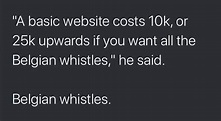
BEFORE YOU READ ANY FURTHER, I need to add a disclaimer for readers at a literacy level of You Magazine and the package inserts on Benzodiazapine labels: I WILL SEE YOU HAVE DONE IT. This content is original and protected by copyright. No part of this material may be reproduced, distributed, or repurposed in any form without explicit written permission from the author. This includes, but is not limited to, scraping, text and data mining, or use in machine learning or AI training systems where such use is not expressly licensed. Unauthorised reuse may constitute infringement of intellectual property rights under applicable law. Viewing or accessing this material does not grant any rights to reuse or commercialise it. All rights reserved.
About the study
My blog was one of several included in a case study of the stats of visitor behaviour on 6 social media platforms. For the duration, 3 would be dormant (LinkedIn, WordPress, Substack) and 3 active (Instagram, Threads, and Facebook – with Facebook only active via posts shared from Instagram i.e. no interaction or login). I must add a side note here: At the start of the study I sent a request to all my social media friends to explain the study and to ask that they refrain from sending me unnecessary Instagram shit that might affect the statistics, such as memes and links to videos of white trash behaving badly, or drunk people dancing and falling out of their shoes. Two of you ignored that request completely, thank you Tania and Kai’s Mom, you utter arseholes, and thanks for the laughs. Don’t stop, because nobody else seems to have noticed my absence at all, except the stalkers making Styrofoam ball clusters.
The study period is over and I’m allowed to play on my platforms again, I won’t deny I’ve missed blogging. I haven’t received the study’s final analysis document to read yet, but as the conclusions emerge I will share in future posts here. It is a fascinating emerging field of study. Cancel culture, internet fraud, and misappropriation (theft) of content by AI have officially become a social crisis.
Styrofoam Balls and the Algorithm Static Effect
“Styrofoam balls” refers to the interference patterns that appear when trying to interpret social media behaviour under conditions of:
- inactivity
- partial visibility
- algorithmic noise
- and external contamination from unsolicited content injection
for example…a croak in the night becomes a signal, a grunt becomes data, stops and pauses becomes a stalker or a harvester. Sometimes it is just Styrofoam balls bouncing in a static room. White noise mistaken for meaning. I don’t understand any of it myself, it sounds like something from a movie I wouldn’t watch, perhaps starring Keanu Reeves. But in the context of forensic IT, it matters more than people think. They see a map with clusters of activity, time spent, that sort of technical stuff.
Because what they can detect is not always what we can interpret, and what we can interpret is not always what was intended. Electricity behaves like this too, hot currents seeking paths of least resistance, rerouting when blocked. Gossip, similarly, broadcasting proudly in vacuum, will not collapse under verification, and simply adjust the audience.
And human systems behave like both:
- emotional conductivity
- reputational voltage
- and the occasional grounding failure of offline reality
Add in external influence factors (family systems, institutional memory, and the occasional unresolved 12-step narrative), and the signal becomes even harder to isolate.
AI and the Current Debacle
We are now in a moment where content no longer belongs neatly to its origin point.
Questions arise:
- What is authored?
- What is derived?
- What is reconstructed?
- What is harvested, remixed, or statistically echoed?
And crucially: what happens when content is consumed by systems that do not “read” in the human sense, but instead pattern-match and absorb? This is where the Styrofoam balls begin to matter to the scientists behind the study. It’s all new, and it’s fascinating, but it scares me. Noise becomes training data. Training data becomes output. Output becomes mistaken for intention. And intention is where law, ethics, and interpretation all collide.
It was very uncomfortable to have my social media under scrutiny, that’s for sure.
Coming Next, I’ll share more of the stuff I’m learning during my daily trots.
- What is plagiarism, really, in a post-AI world?
- Where does inspiration end and extraction begin?
- And who gets to decide?
FREE SERVICE ANNOUNCEMENT
For more information about emerging digital law frameworks, or if you believe you have been affected by online abuse, reputational damage, or disputes involving digital footprint interpretation, professional assistance is available: https://www.thedigitallawco.com/
(Please note: this is shared as a resource, not an endorsement of outcome guarantees.)
\ Get the latest news /

[…] Three live wires. Three dead archives. It’s astonishing what goes on. Click here to read STYROFOAM BALLS IN STATIC ROOMS An Introduction to What Forensic IT Can Establish About Social Media… […]